All ports
Turkey · Days 4–5 · Overnight in port
Istanbul
Two continents, a thousand-year skyline, and the one night we don't sail away. Mosques by day, Beyoğlu by night — pace yourself, she's a lot.
Two continents, a thousand-year skyline, and the one night we don't sail away. Mosques by day, Beyoğlu by night — pace yourself, she's a lot.
Most of the headliners sit in Sultanahmet, across the Golden Horn — a ~20-minute tram from the ship. Pick two or three interiors; don't try to stack them all or fatigue wins. Mosques are free; dress modestly and mind prayer-time closures.
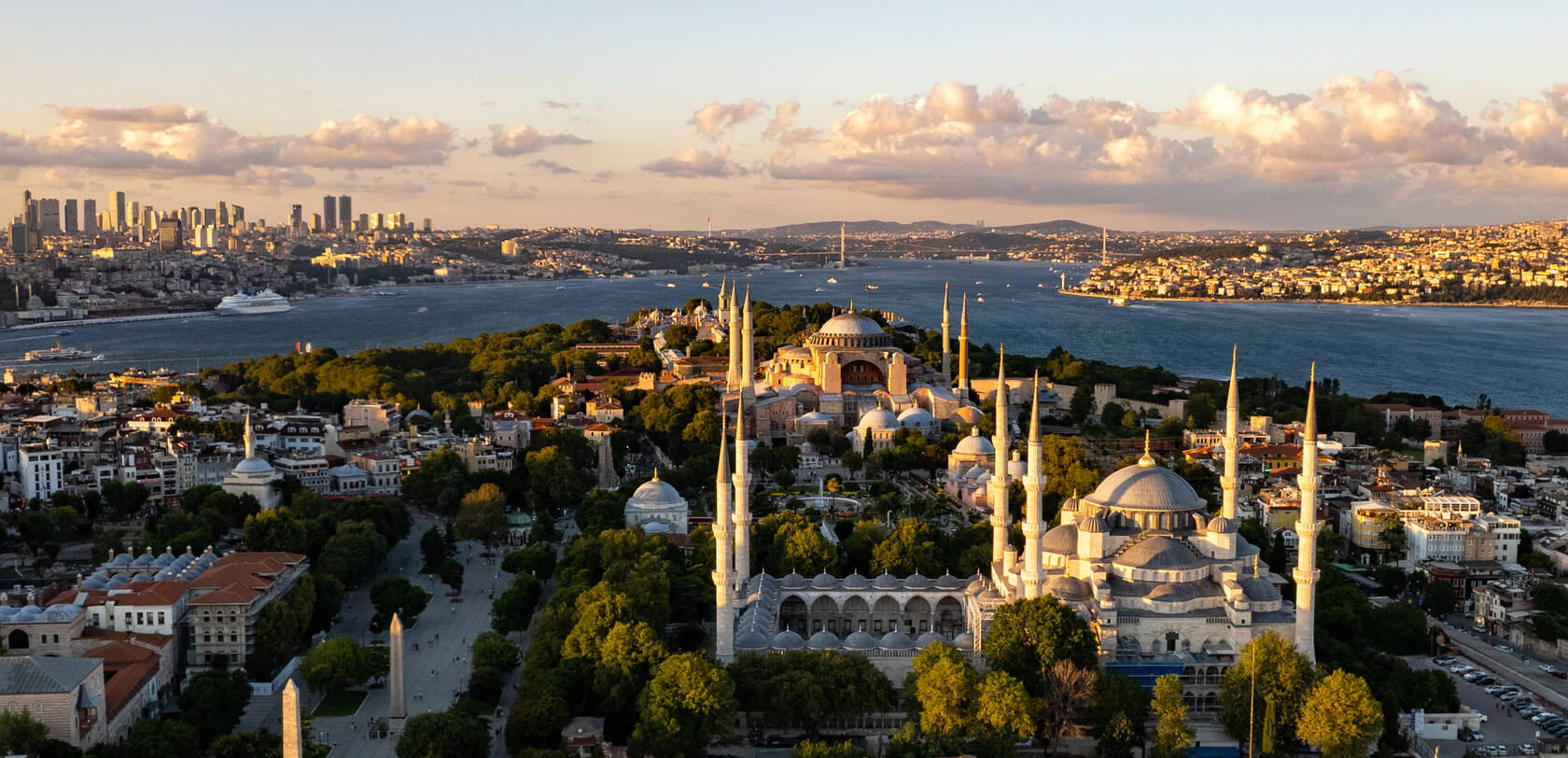
1,500 years of plot twists in one building — Byzantine cathedral, then mosque, then museum, now a mosque again. That vast floating dome is still one of the great rooms on Earth.
Sultan Ahmed's six-minaret showstopper, named for the 20,000 İznik tiles glowing inside. Free to enter, five-minute walk from Hagia Sophia — they face off across the square.
Four courtyards of sultans, harem intrigue, and a treasury dripping with emeralds — plus knockout Bosphorus views from the terraces. Needs a couple of hours to do properly.
A cathedral-sized 6th-century water cistern beneath the city — 336 columns, Medusa heads, dramatic uplighting, and blessed cool air on a hot day.
The medieval watchtower a short walk uphill from the ship, with a 360° balcony over the whole peninsula. The classic "I was in Istanbul" panorama.
See the city the way it's meant to be seen — from the water, palaces and waterfront mansions sliding past as you cross between Europe and Asia. Public ferries cost a couple of lira.
Istanbul might be the best eating of the whole itinerary — and conveniently, the good stuff is right in Karaköy by the ship. Three ways to do it:
A rooftop meyhane with the Golden Horn and Galata Tower laid out in front of you. Colourful meze, grilled everything, rakı clinking — the whole Istanbul-evening fantasy in one terrace.
A Michelin Bib Gourmand icon: turquoise-tiled, always buzzing. Order the hünkâr beğendi (lamb over silky eggplant) and the grilled octopus. Lunch lokanta by day, full meyhane by night.
The real ritual: a long table, endless cold then hot meze, rakı topped with water and ice, and zero rush. Mahkeme Lokantası — tucked in a restored Karaköy han — is a local favourite for it.
Grab a balık ekmek (grilled mackerel sandwich) from the boats by the Galata Bridge, then the best baklava of your life at Karaköy Güllüoğlu — paper-thin layers, crushed pistachio, since 1949.
This is the one Turkish stop with a genuine gay scene — clustered in Beyoğlu around Taksim and İstiklal Avenue, up the hill from the ship. It's discreet (rainbow flags hang quietly in windows) but it's real, and it runs till dawn. Follow the side streets.
Istanbul's largest and most popular gay dance club, on Sıraselviler in Beyoğlu — open every night, packed on weekends, with drag on quieter nights and an open-air garden out back. Start your bearings here.
The long-running institution — international DJs, drag, themed parties, a proper dance-floor night. A 10-minute walk from Taksim and worth the trek for the full Turkish-club experience.
A basement techno den in Beyoğlu — industrial, dark, sweaty, for when you want the proper underground night rather than Turkish pop. The afters crowd ends up here.
The side streets off İstiklal hide cozy bars — Pinokyo, Chianti and friends — perfect for live music and a drink before the clubs. The crowd spills between them as the night builds.
From a 550-year-old covered labyrinth to indie design streets — Istanbul shops at every speed. Haggling is expected in the bazaars, not the boutiques.
One of the world's oldest and largest covered markets — carpets, lamps, gold, ceramics, leather, and the evil-eye charms by the bucket. Glorious, dizzying, a little relentless.
Down in Eminönü: pyramids of spices, Turkish delight, dried fruit, teas and saffron under vaulted ceilings. The best-smelling souvenir run in the city.
İstiklal Avenue for the big-brand parade and the nostalgic red tram; the lanes of Karaköy and Serdar-ı Ekrem for independent design, boutiques and concept stores.
Not shopping, but the ultimate take-home feeling: a steam, scrub and foam wash in a centuries-old marble bathhouse (Çemberlitaş and Galatasaray are the historic grand ones).
A glorious, sprawling, occasionally hustly city — a little savvy keeps the day (and night) smooth.
More open than the rest of Turkey, with a genuine Beyoğlu scene — but legally unprotected and socially conservative. Pride has been banned for years; public affection draws stares anywhere. The freedom lives inside the venues, not on İstiklal.
A friendly local strikes up a chat, suggests "a great little bar," and an hour later you're handed a bill for hundreds. It specifically targets solo male tourists. Famous, and still happening.
Insist the taxi meter ("taksimetre") is running, or book via BiTaksi/Uber. Pay in Lira; decline any card machine offering to charge in euros or dollars at the shop's rate.
Shoulders and knees covered for everyone; women cover their hair (scarves are often lent at the door). Shoes off — carry a bag for them. No visits during the five daily prayers.