All ports
Turkey · Day 3 of the voyage
Kuşadası
A breezy resort town with a 2,000-year-old headline act next door: Ephesus, one of the greatest ancient cities on Earth.
A breezy resort town with a 2,000-year-old headline act next door: Ephesus, one of the greatest ancient cities on Earth.
Once a Roman metropolis of 250,000 and a great port of the ancient world — now marble streets, towering façades, and a theatre that still takes your breath. Allow 2–3 hours; a guide (or the free Rick Steves audio tour) brings the rubble to life.
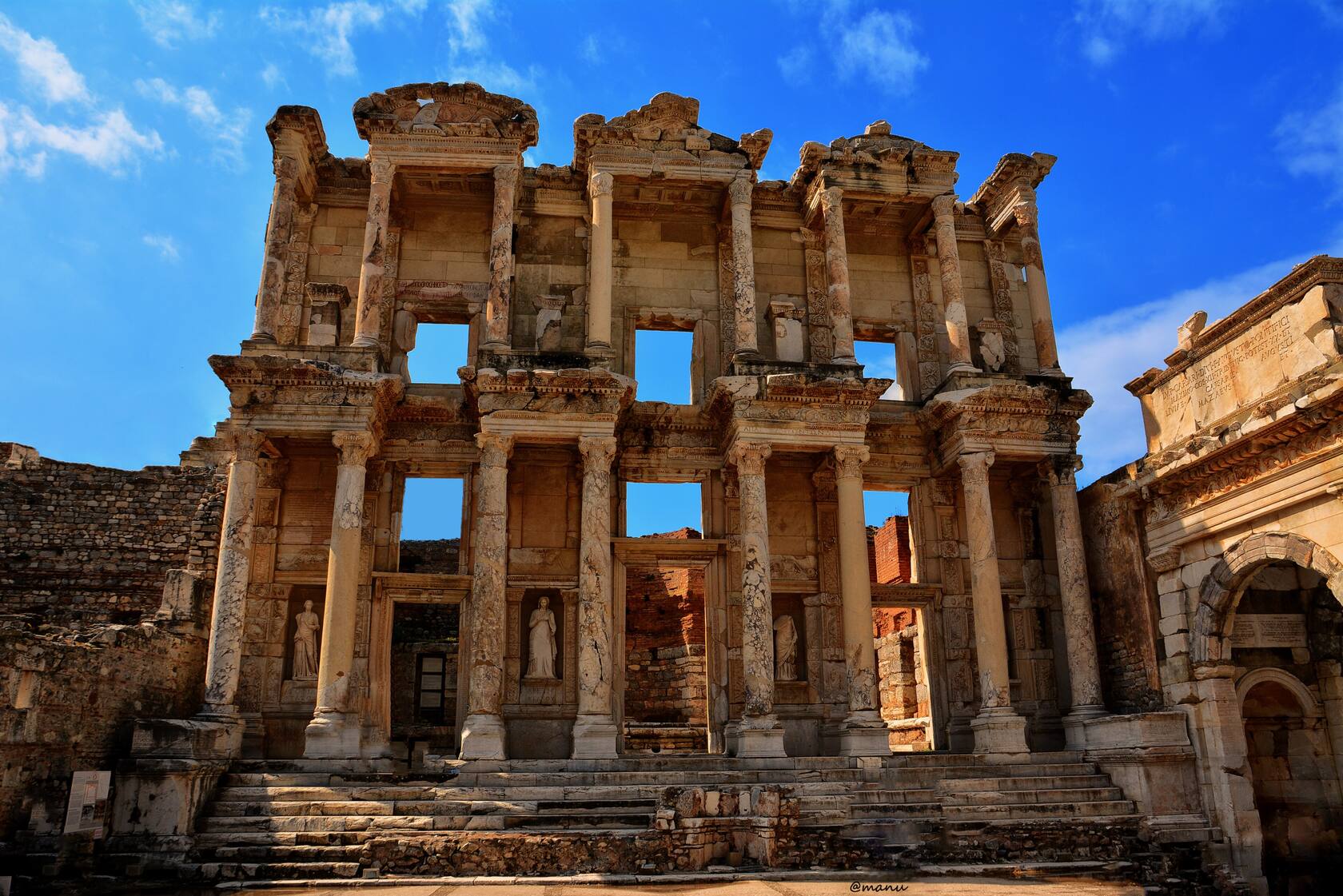
The two-storey 2nd-century façade that launched a million postcards. It once held ~12,000 scrolls — the third-largest library of the ancient world — and the senator Celsus is buried in a crypt right beneath it.
A vast hillside amphitheatre you can still climb — St. Paul is said to have preached to the Ephesians here. The view back down Harbour Street is worth the steps.
The "Houses of the Rich" — Roman homes preserved with 2,000-year-old mosaics, frescoes, and even early underfloor heating. A separate ticket, and worth it for history nerds.
A tiny hillside shrine where Mary is said to have spent her final years — sacred to Christians and Muslims alike. Quiet, leafy, a world away from the bazaar.
One of the Seven Wonders of the Ancient World… now essentially one lonely reconstructed column in a field. A pilgrimage for the romantics; a shrug for everyone else.
Ephesus is ~19 km away. Take a tour, a taxi, or the cheap dolmuş (minibus, ~€1 via Selçuk). 2026 entry is €40 (now bundles the Ephesus Experience Museum); Terrace Houses are €15 more.
Most tours fold in lunch, but if you're DIY-ing it, Turkish food is the cheap, delicious sleeper hit of the whole itinerary. Three ways to do it:
The waterfront is lined with fish restaurants looking across to the Greek island of Samos. Grilled sea bass, a cold beer, the Aegean breeze — a fine reward after dusty marble.
Skip the harbour markup and find a back-street lokanta for the real thing: döner, köfte, fresh gözleme off the griddle, mezes you'll think about for weeks. The kebab here ruins the version back home.
Pull up a low stool in the bazaar lanes for thick Turkish coffee or apple tea and a plate of sticky baklava — and an Efes beer, named after the very ruins you just walked.
Turkish delight (lokum) in every flavour, spices by the scoop, dried figs and apricots, baklava boxed to travel. Cheap, delicious, and lighter than a rug.
It starts the second you cross from the port. Thousands of shops, charming and relentless in equal measure — go in knowing the game and you'll have fun.
Half-covered lanes packed with rugs, leather, gold, ceramics and the blue evil-eye (nazar) charms. Just off Liman Avenue, past the old Caravanserail.
The headline purchases — and where haggling is expected. Cards work for big-ticket items; cash gets you a better number on the small stuff.
The pedestrian street with the fountain — stalls of Turkish delight and apple tea, lower-pressure browsing, and a decent run of cafés to regroup in.
Beware the "friendly stranger" offering a free tour, a family event, or a "rug school" — they're lead-ins to a high-pressure sales room. And watch fakes priced like the real thing.
A short, hot, conservative port — a little prep makes it a great day.
Turkey is legal-but-conservative: homosexuality has been legal since 1858, but there's no scene here and attitudes are traditional. As a tourist wandering Ephesus and the bazaar you're completely fine — just skip the public affection, which even straight couples keep low-key.
Pay in Lira for the best rate; if a card machine offers to charge in euros or dollars, decline — that "convenience" rate is a quiet markup. Carry a little cash for the dolmuş and small stalls.
Ephesus is open marble with almost no shade, and July bakes. Hat, sunscreen, refillable water, comfortable shoes for uneven stone — and go as early as your tour allows.
Ship Wi-Fi aside, a cheap eSIM (Airalo and friends, a few dollars for the day) keeps maps, WhatsApp and your tour guide's messages flowing while ashore.